Learn
Why your 'healthy' lunch is the one that bloats you
Smoothies, salads, beans, cauliflower, oat milk: the foods on every wellness list also top the gut's most-fermentable list. The reason isn't that they're bad for you. It's that healthy says nothing about how your gut handles them, and the dose adds up.
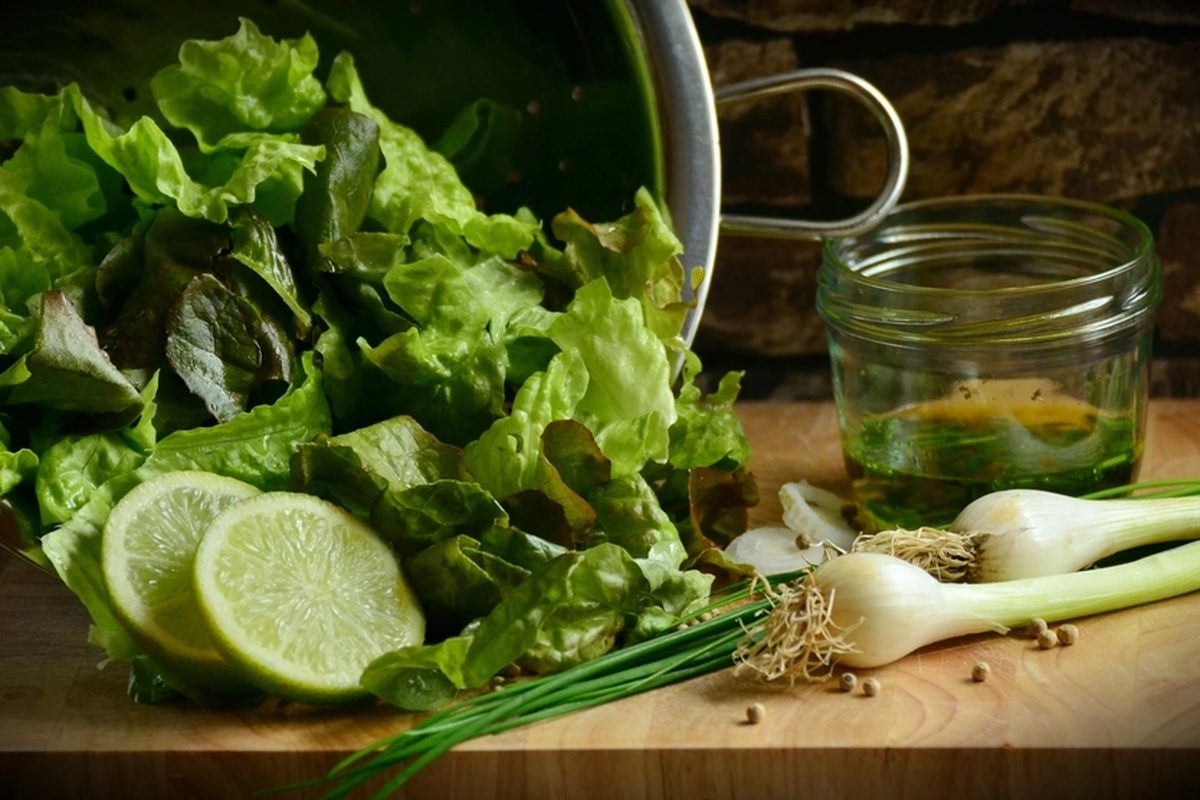
The lunch where everything was 'good for you'
You built the responsible plate. A green smoothie, or a big salad with beans and avocado, or roasted cauliflower with hummus and a kombucha. Nothing fried, nothing you'd feel guilty about. Two hours later your waistband is tight and your stomach feels like a balloon someone keeps inflating.
And here's the part that doesn't fit the story you've been told: a fast-food burger might have left you fine. You ate the food the internet calls clean, and the clean food is the one that turned on you. So what does your gut know about that smoothie that the wellness blog didn't?
Healthy is a nutrition label. Your gut is reading a different one
Here's the idea worth carrying out of this piece: "healthy" and "easy on your gut" are two unrelated questions, and most people have them fused into one. Healthy is about vitamins, fiber, protein, and what a food does over years. Whether it bloats you is about something else entirely — how much of that food your small intestine can actually absorb before it reaches the bacteria waiting downstream.
A lot of celebrated foods score great on the first question and terrible on the second. That's not a flaw in the food or in you. It's a property your gut measures that the label never prints. Once you can see that second number, the mystery lunch stops being a mystery, and you stop blaming yourself for reacting to a salad.
Your gut runs on a gas budget, and these foods spend it fast
The compounds behind most of this bloating have an ugly name: FODMAPs, short for fermentable oligosaccharides, disaccharides, monosaccharides, and polyols. Strip the jargon and it's a short list of carbs your small intestine is bad at absorbing: the fructans in garlic, onion, and wheat; the excess fructose in honey and apples; the polyols like sorbitol in avocado and mannitol in cauliflower; the GOS in beans and chickpeas. They're in some of the most nutritious foods on earth, which is exactly why this is confusing.
Picture your gut as a brewery. When a fermentable carb slips past the small intestine unabsorbed, it arrives in your colon where trillions of bacteria live. They do what brewer's yeast does to sugar: they ferment it, and fermentation makes gas: hydrogen, methane, carbon dioxide. The FODMAPs also pull water into your gut along the way. Gas plus water stretches the bowel wall, and that stretch is the bloating, the cramp, the pressure you feel. This is normal digestion, by the way. Everyone's bacteria do this. In a sensitive gut, the stretching just registers as pain instead of going unnoticed, which is why Monash University, the lab that named FODMAPs, frames it as a tolerance threshold, not a malfunction.
Now the move that explains your lunch. Your gut doesn't grade foods one at a time — it adds them up. Every fermentable food spends from the same budget, and a green smoothie can pour several modest sources into one fast-drunk glass: a green apple, half an avocado, a handful of cashews, a date. Each might sit under your line alone. Together they clear it. Monash calls this stacking, and the key detail is that every FODMAP adds to every other type, so unlike compounds pile up together. The fructose in the apple stacks on the sorbitol in the avocado stacks on the GOS in a scoop of plant protein. Blending makes it worse, because a glass delivers the whole load to your colon almost at once, with none of the pacing that chewing a slower meal gives you.
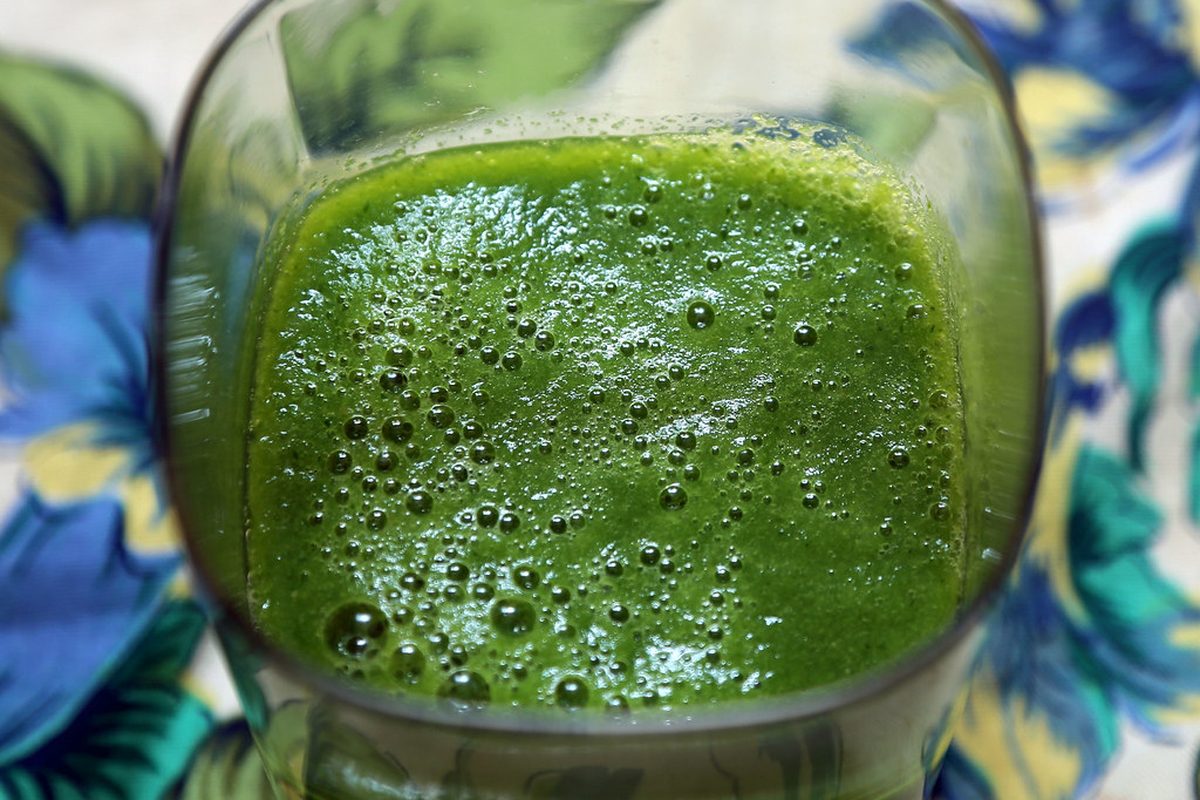
The usual suspects, and the compound behind each
These are the foods that most reliably top both the wellness list and the fermentable list. The trigger doses are rough population thresholds from Monash's tested serving sizes: the portion that sits under most people's line on its own. Yours may be higher or lower, and the point of the whole exercise is to find where yours actually is.
g fructans / 100g
| Food | Fermentable compound | Rough trigger dose | Gentler swap |
|---|---|---|---|
| Garlic & onion | Fructans | ~1 clove / under 1 tsp powder | Garlic-infused oil (fructans aren't oil-soluble) |
| Apples | Excess fructose + sorbitol | 1 medium | Orange, kiwi, or firm banana |
| Beans & chickpeas | GOS | ~1/4 cup | Smaller serving; canned and well-rinsed |
| Cauliflower | Mannitol | ~1/2 cup | Carrot, green beans, or bok choy |
| Avocado | Sorbitol | ~1/2 fruit | 1/8 avocado, or a thin slice |
| Honey | Excess fructose | ~1 tbsp | Maple syrup or rice malt syrup |
| Oat milk | Fructans (brand-dependent) | ~1 cup | Almond, macadamia, or lactose-free milk |
| Protein/snack bars | Inulin / chicory root fiber | 1 bar (often 5–8g inulin) | A bar with no chicory root or inulin |
What's solid here, and what isn't
The mechanism is well established. FODMAPs are poorly absorbed in the small intestine, fermented in the colon, and the resulting gas and water distend the bowel. Monash University's group has characterized this since they coined the term in 2005, and the traffic-light serving sizes in their app come from lab-measuring the FODMAP content of specific foods at specific portions. Stacking follows directly: because tolerance runs on a total, low-FODMAP servings can add up past your threshold in one sitting. That's not a theory, it's arithmetic on measured numbers.
What's genuinely individual is your threshold. Monash set its cutoffs conservatively, so many people tolerate several green servings together with no trouble at all, while a more sensitive gut reacts to a stack that the label calls safe. There's no blood test that prints your number. The published cutoffs are where most people sit, not where you sit, and the only way to find your line is to watch your own meals against your own symptoms over time.
What to do this week
You don't need to fear vegetables or quit the foods that are good for you. You need to stop stacking blindly and start spending the budget on purpose. Three moves, most important first.
- Stop testing foods; start testing the meal. Pick the one fermentable food you eat almost daily (for most people that's garlic, oat milk, or a bean and chickpea staple), hold its portion fixed, and change nothing else for two weeks. One variable, or you learn nothing.
- Unstack your plate by spacing it. Leaving roughly 3–4 hours between fermentable meals and snacks lets one load clear before the next arrives, so the same foods stop piling onto one threshold. Often you don't have to drop a food at all. You just have to stop eating it on top of another.
- Watch the dose, and the clock. Log how much you ate, not the food alone: 'half an avocado' and 'a thin slice' are different experiments. Because fructans and polyols ferment in the colon, the bloat often lands 4–24 hours later, so the meal that wrecked you may be yesterday's, not lunch.
- Use the garlic-oil trick. Garlic's fructans are water-soluble, not oil-soluble, so garlic-infused oil carries the flavor while the FODMAPs stay behind in the discarded solids. It's the rare case where you keep the taste and skip the gas.
Where this gets hard to do in your head
Here's the catch the advice above runs into: a stack is a sum spread across hours and across foods, and that's exactly the thing human memory is worst at. You'll recall the smoothie. You won't reliably connect it to the hummus three hours earlier and the bloat that didn't peak until that night. A timestamped log that tallies what you ate and when symptoms hit does the addition you can't hold in your head. It's why we built Bellyweather around the photo as the log: it surfaces the load across a day so the pattern stops hiding. A pattern it finds is a lead to test on your next calm day, not a verdict.
This is general information, not medical advice. Persistent bloating, pain, or a sudden change in your gut is worth a conversation with a clinician. And if you have a diagnosed condition, treat the low-FODMAP approach as something to do with a dietitian, since it isn't meant to be a permanent way to eat.
The lunch wasn't the mistake
Go back to that balloon-stomach lunch. Every food on the plate was good for you, and not one of them was the answer, because your gut was never grading them on healthy. It was adding up how much fermentable carb showed up at once, and the responsible plate happened to deliver a lot of it in one go. The food didn't betray you. You were just reading a different label than your gut was. Now you know which one it's reading.
Frequently asked questions
If these foods are healthy, why do they bloat me and junk food doesn't?
Whether a food is nutritious and whether your gut absorbs it easily are separate things. Many healthy foods are high in fermentable carbs (FODMAPs) your small intestine can't fully absorb, so bacteria ferment them into gas. Refined junk food is often low in these, which means fewer fermentable carbs and less gas.
What is FODMAP stacking?
Stacking is when several foods that are each low-FODMAP on their own add up past your tolerance threshold in one meal or one window. Per Monash, any FODMAP type adds to any other: the fructose in an apple stacks on the sorbitol in avocado stacks on the GOS in beans. The total, not any single food, is what tips you over.
Why does garlic bloat me but garlic-infused oil doesn't?
The fructans in garlic are water-soluble, not oil-soluble. Infuse oil with garlic and remove the solids, and the flavor transfers while the fructans stay behind, so the oil carries little to no FODMAP load. Note that cooking garlic in a watery dish does leach fructans into the food, which is why removing the cloves later doesn't help.
How long after eating will I bloat?
It depends on the compound. Fructans and polyols ferment in the colon, so symptoms often appear 4–24 hours later. Lactose tends to act within a few hours. That delay is why the meal you blame is often the wrong one, and why a timestamped log beats trying to remember.
Do I have to give these foods up?
Usually not. The goal is to find your personal tolerance dose and stop stacking, not to cut nutritious foods forever. Most people keep the foods they love at a portion and spacing that works, and only drop the few that genuinely don't agree with them.
Sources
- Monash University — About FODMAPs and IBS (mechanism: malabsorption, fermentation, gas and water)
- Monash University — FODMAP Stacking Explained (any FODMAP adds to any other; threshold; meal spacing)
- Monash University — Onion, garlic and infused oils on the low-FODMAP diet (fructans water- not oil-soluble)
- Muir et al., Fructan and free fructose content of common foods, J Agric Food Chem (2007)
- Gibson et al., ISAPP consensus on prebiotics (inulin/chicory root fiber), Nat Rev Gastroenterol Hepatol (2017)
- NIDDK (NIH) — Symptoms & Causes of Gas in the Digestive Tract
Bellyweather is a wellness and food-tracking app, not a medical device. This article is for general information only and is not medical advice. Never use an article, rating, or AI response to decide whether a food is allergy-safe. Individual tolerances vary — talk to a qualified healthcare professional before making dietary changes related to a health condition.