Learn
The same meal is a different food on day three
Histamine can build in certain foods during handling, aging, or fermentation, but the evidence is strongest for specific fish and much less certain for ordinary leftovers. What chilling, freezing, and reheating can actually change.
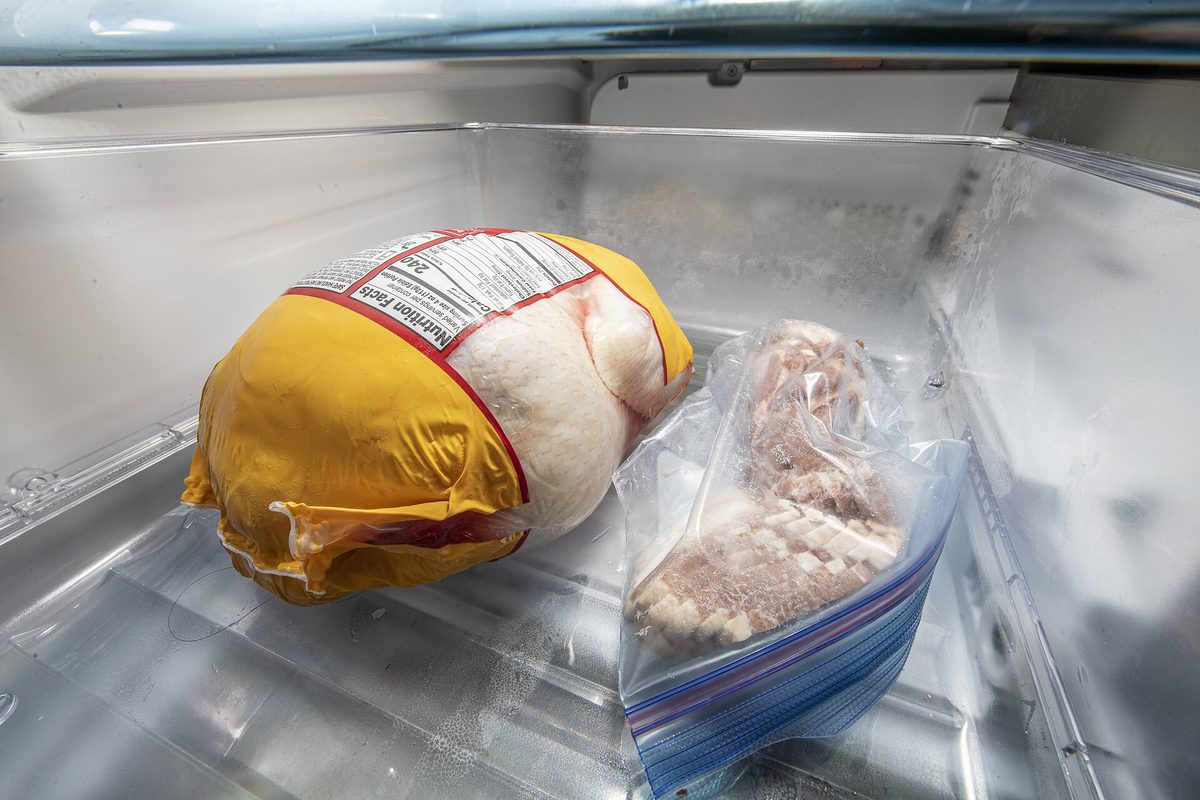
The day-three meal is not a lab result
A meal feels fine when it is fresh and rough after a few days in the refrigerator. Online histamine lists offer a tidy explanation: the leftovers must have filled with histamine. That can happen in some foods, but the confident version outruns the evidence.
The strongest proof concerns histamine-forming fish that were not chilled properly. Aged and fermented products can also contain substantial but highly variable amounts. For an ordinary cooked chicken or vegetable stew stored safely at home, there is no universal clock that turns day three into a high-histamine meal. The calendar is worth recording, not convicting by itself.
Why this is really about your whole body, not your fridge
Histamine is a signaling molecule involved in immune responses, stomach acid, wakefulness, and other normal functions. Food can deliver histamine too. The proposed model of histamine intolerance says symptoms appear when absorbed histamine exceeds a person's ability to break it down, including through the intestinal enzyme diamine oxidase, or DAO.
That model is plausible but not a settled diagnosis. Reviews repeatedly note the lack of a validated biomarker, a standardized food list, and a blinded test that reliably identifies the condition. Flushing, headache, hives, a racing heart, abdominal pain, and diarrhea also have many other causes. The useful question is whether a pattern repeats and deserves clinical review, not whether one leftover proves an intolerance.
The bucket, the drain, and the bacteria filling it
The bucket is a useful analogy, not a diagnostic model. Food histamine, histamine released by your own cells, medications, alcohol, intestinal health, and individual metabolism may all affect the total exposure and response. DAO is one proposed drain, but a blood DAO result alone does not establish histamine intolerance.
The food chemistry is clearer. Certain bacteria carry an enzyme that converts the amino acid histidine into histamine. Give those bacteria a suitable food, enough time, and temperatures that allow growth, and the concentration can rise. This is well documented in scombrotoxin-forming fish such as tuna and mackerel, which is why the FDA regulates time and temperature handling so closely.
Once histamine has formed in fish, it is heat-stable. Cooking, smoking, canning, or freezing does not reliably remove it. Cold matters because it slows further bacterial growth and histamine formation; it is prevention, not an eraser. Extending that exact rate to every home-cooked protein would be a guess, so ordinary leftovers need more careful language.
What the fish data shows — and what it doesn't
The FDA documents how histamine forms in species such as tuna and mackerel when the cold chain fails. Once a hazardous amount has formed, neither cooking nor freezing makes the fish safe. Scombrotoxin poisoning is an acute food-safety event that can resemble an allergic reaction; it is not the same thing as the debated chronic condition called histamine intolerance.
For everyday intolerance claims, the evidence is thinner. Reviews describe wide variation in the histamine content of aged and fermented foods and disagreement across low-histamine food lists. The commonly repeated estimate that about 1% of people are affected is not supported by strong population data. A short, clinician-guided diet and reintroduction may be used in evaluation, but response to a restrictive list does not prove DAO deficiency or identify a universal set of foods.

| Category | Examples | Why it runs high |
|---|---|---|
| Mishandled histamine-forming fish | Tuna, mackerel, mahi-mahi and related species | Strong food-safety evidence for bacterial formation when temperature control fails |
| Aged cheese | Parmesan, cheddar, blue cheese | Aging can allow biogenic amines to accumulate; amounts vary by batch |
| Fermented products | Some cured meats, soy sauce, sauerkraut, wine | Microbes can produce histamine, but species and production conditions differ |
| Ordinary refrigerated leftovers | Cooked poultry, grains, vegetables, mixed meals | No universal day-by-day histamine rule; safe storage still matters |
| So-called histamine liberators | Lists often name tomato, citrus, strawberry, or chocolate | Human evidence is inconsistent and the category is not standardized |
The one move, then the small ones
If you and a clinician are investigating whether storage changes your response, compare like with like: one portion eaten fresh, one cooled promptly and refrigerated within standard food-safety limits, and one frozen promptly. Freezing early can prevent additional bacterial activity, but it cannot lower histamine that was already present before the food reached your freezer.
Keep food safety separate from an intolerance experiment. USDA says to refrigerate or freeze leftovers within two hours, use refrigerated leftovers within three to four days, and reheat them to 165°F. A food can be safe within those limits and still be a personal symptom trigger; it can also be unsafe without producing a histamine-type reaction.
- Keep histamine-forming fish cold from purchase through cooking; discard fish that may have been temperature-abused.
- Cool leftovers promptly in shallow containers and follow USDA's three-to-four-day refrigerator limit.
- Freeze a comparison portion promptly if you are testing storage, rather than freezing it after several refrigerator days.
- Change storage while keeping the recipe and portion similar, then review any repeated pattern with a clinician.
| Storage path | What it changes | What it cannot prove | Food-safety boundary |
|---|---|---|---|
| Eat promptly after cooking | Minimizes post-cooking storage time | That the food began low in histamine | Do not leave perishables out longer than two hours |
| Cool promptly and refrigerate | Allows a standard leftover comparison | A universal rise in histamine each day | Use most leftovers within three to four days |
| Cool promptly and freeze | Slows further bacterial growth and chemical change | Removal of histamine already present | Thaw and reheat using USDA guidance |
| Reheat | Raises serving temperature and can kill many bacteria | Removal of heat-stable histamine in affected fish | Reheat leftovers to 165°F |
When this stops being a kitchen problem
Hives, swelling, wheezing, throat tightness, faintness, or difficulty breathing can signal an allergic emergency. Treat them as urgent symptoms, not as evidence that a leftover exceeded a personal bucket. Scombrotoxin fish poisoning can also resemble allergy and may affect several people who ate the same fish; contact poison control or seek prompt care.
See a clinician before committing to a long low-histamine diet. It is restrictive, food lists conflict, and similar symptoms can come from allergy, medication effects, mast cell disorders, gastrointestinal disease, or other causes. A meal-and-storage log can give that conversation better facts. It cannot validate the diagnosis on its own.
The calendar, not the chicken
Go back to the day-three meal. The calendar may matter, but it is not a lab result. Record it, compare it, and keep the food-safety rules firm. The honest version is less tidy than the internet list: storage can change food chemistry, the size of that change depends on the food, and your symptoms still need more than one leftover to explain them.
Frequently asked questions
Why do leftovers bother me but the same food fresh doesn't?
Storage can change food chemistry, but histamine is only one possible explanation and is best established in certain temperature-abused fish. Portion, meal composition, spoilage organisms, and expectation can also differ. Record repeated fresh-versus-stored comparisons and discuss persistent reactions with a clinician.
Is histamine intolerance the same as a food allergy?
No. A food allergy is an immune reaction to a specific food protein and can be dangerous at tiny amounts. Histamine intolerance is a proposed problem of handling dietary histamine, but it lacks a definitive diagnostic test. Breathing trouble, throat tightness, faintness, or facial swelling needs emergency evaluation.
Does freezing or cooking reduce the histamine in food?
For scombrotoxin-forming fish, FDA states that cooking and freezing do not remove histamine already present. Prompt freezing slows further bacterial activity, but evidence does not support a universal promise that every frozen leftover will be gentler than every refrigerated one.
Why is the same dish fine some days and not others?
Many variables change across days, including portion, other foods, alcohol, medication, illness, sleep, and expectation. A “bucket” is a useful way to picture cumulative exposure, but it is not a validated diagnostic model. Repeated, well-recorded patterns are more informative than one inconsistent meal.
Sources
- Maintz & Novak, Histamine and histamine intolerance, Am J Clin Nutr (2007)
- Comas-Basté et al., Histamine intolerance: the current state of the art, Biomolecules (2020)
- Cleveland Clinic — Histamine Intolerance
- FDA — Fish & Fishery Products Hazards and Controls Guidance, Ch. 7: Scombrotoxin (Histamine) Formation
- USDA FSIS — Leftovers and Food Safety
Bellyweather is a wellness and food-tracking app, not a medical device. This article is for general information only and is not medical advice. Never use an article, rating, or AI response to decide whether a food is allergy-safe. Individual tolerances vary — talk to a qualified healthcare professional before making dietary changes related to a health condition.