Learn
The high-FODMAP 'avoid' list is a test, not a life sentence
Onions, wheat, apples, milk. The FODMAP avoid list reads like foods you can never eat again. It's actually a short diagnostic: cut the whole list briefly, then add families back to find which fermentable carbs your gut can't handle, and in what amount.
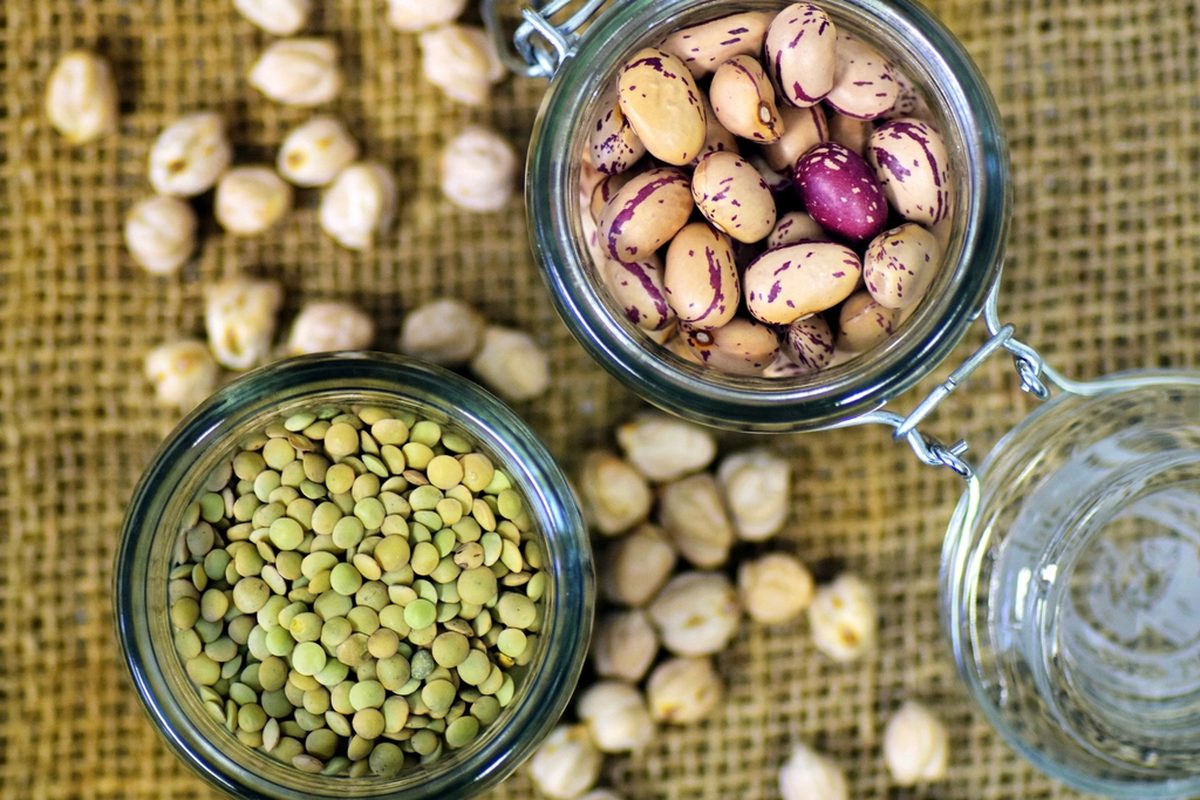
The list that looks like a life sentence
You get diagnosed with IBS, you search what to eat, and the same wall of red comes back: no onion, no garlic, no wheat, no apples, no milk, no beans, no mango, no mushrooms. It reads like a list of foods you've eaten your whole life and now have to mourn. So a lot of people do the logical thing. They print the list, tape it to the fridge, and try to avoid all of it, forever.
That's the move that quietly backfires. The list was never meant to be permanent, and the people who built it say so plainly. You're treating a diagnostic test like a diet. The avoid list isn't the answer to which foods are bad for you. It's the question.
Why this matters past your stomach
Here's the part worth getting right, because it touches more than a bad afternoon. Your gut isn't a passive tube that grades lunch. It's a stretch-sensitive organ lined with its own nervous system, and the colon is where most of your gut bacteria live and feed. The fermentable carbs on that list are also, for the most part, food for those bacteria. Cut all of them indefinitely and you don't just lose onions. You thin out the fiber your microbes run on. The avoid list, run forever, can shrink the very ecosystem you're trying to settle.
So the goal isn't the longest possible list of forbidden foods. It's the shortest one that keeps you comfortable. The high-FODMAP list is a temporary elimination whose entire point is to be narrowed back down: to find which of four carbohydrate families your gut actually can't handle, and how much of each it can take before it complains. By the end you'll know how to run it as a test instead of living inside it.
FODMAP is four families, not one bad food
FODMAP is an acronym for a class of short-chain carbohydrates that your small intestine absorbs slowly and incompletely. They aren't toxins and they aren't unhealthy. They're just hard to absorb, and that's the whole problem. Two things happen when they pass through. While they sit in the small intestine, they pull water in alongside them, because they're small, water-loving molecules. Whatever isn't absorbed moves on to the colon, where your bacteria ferment it and release gas. Water plus gas stretches the bowel wall, and a sensitive gut reads that stretch as bloating, cramping, or an urgent trip to the bathroom.
The reason the avoid list looks so long is that four different families all do this, and they live in unrelated foods. Fructans and GOS (galacto-oligosaccharides) are the oligosaccharides; they're in wheat, rye, onion, garlic, and beans. Lactose is the sugar in milk, soft cheese, and yogurt. Excess fructose means more fructose than glucose in a food, which absorbs poorly; it's in honey, apples, mango, and high-fructose corn syrup. Polyols are the sugar alcohols sorbitol and mannitol, in stone fruit, mushrooms, cauliflower, and most sugar-free gum. A person might react hard to one family and barely notice the other three. That's why "I'm sensitive to FODMAPs" is almost never the real picture. It's usually one or two families doing the damage while the rest are innocent.
And it isn't pass/fail per food. A "high-FODMAP" food is one whose normal serving carries enough of a family to tip most people over. Eat a smaller portion and it may sit fine. Your tolerance is a budget, not a switch: a little fructan might be nothing, a lot might floor you, and the line between is yours. The chart below shows the same threshold logic. Single servings that each clear it, and the combination that doesn't.
| FODMAP family | Where it hides | What it does |
|---|---|---|
| Fructans + GOS (oligosaccharides) | Wheat, rye, onion, garlic, beans, cashews | No one fully absorbs these; they ferment in the colon |
| Lactose | Milk, soft cheese, yogurt, ice cream | A problem only if you're low on the enzyme lactase |
| Excess fructose | Honey, apple, mango, high-fructose corn syrup | Absorbs poorly when fructose outweighs glucose |
| Polyols (sorbitol, mannitol) | Cherries, plums, mushrooms, cauliflower, sugar-free gum | Sugar alcohols the small intestine barely absorbs |
What's solid, and what the list can't tell you
The diet works for a real share of people, and we can put a number on it. In a 2014 randomized crossover trial of 30 people with IBS, Halmos and colleagues at Monash found that a low-FODMAP diet cut overall gut symptom scores compared with a typical Australian diet. That trial moved this from theory to first-line advice. Monash's own summary of the larger evidence base puts it at roughly 3 in 4 people with IBS improving on the diet. That also means about 1 in 4 don't, which is worth knowing before you rearrange your kitchen around it.
But notice what that trial measured: the strict elimination phase, run for a few weeks. It did not measure living on the list. The cutoff values that define "high" versus "low," laid out by Varney and colleagues in 2017, are population thresholds, set to sit under most people's tolerance. They are not your number. Your personal line is set by your own gut sensitivity, how fast things move through you, and it drifts with stress, sleep, and your cycle. The list can tell you which foods are worth testing. It can't tell you which ones are actually a problem for you, or how much you can have. Only reintroducing them can. And the diet is deliberately temporary: Monash and most dietitians frame the full restriction as a 2-to-6-week diagnostic, not a way to eat, because it's nutritionally narrow and hard on your microbes if you never come off it.
How to run it as a test this month
Treat the avoid list as the start of an experiment with three phases, not a verdict. The aim is to spend as little time on the restricted version as it takes to learn what you need, then get most of your food back.
The reintroduction is the part everyone skips and the part that actually answers the question. You go back to the foods one family at a time, in rising amounts, while you keep eating low-FODMAP otherwise. Testing one family in isolation means a reaction points at one suspect, not a blur. You're not looking for a yes/no. You're looking for your portion: the amount of lactose, or fructans, or each family, that you can have before symptoms start. That number is personal, and it's the whole prize. Because tolerance is a budget, the thing that trips you is a sum across a day, which is genuinely hard to hold in your head. A log that ties each meal to how you felt surfaces the pattern that memory drops; that's the gap Bellyweather is built to close, as a lead to test, not a verdict. If your symptoms are severe or you've lost weight, run this with a doctor or a dietitian rather than solo.
- Eliminate: cut all high-FODMAP foods for 2–6 weeks, long enough to see symptoms settle and not a day longer.
- Reintroduce: add back one family at a time, in rising portions, keeping everything else low so a reaction names one suspect.
- Find your portion, not a yes/no: note the amount of each family you tolerate, since most people can have some.
- Personalize and stop: keep only the specific foods and amounts that actually bother you, and return everything else to your plate.
- Don't live on the strict list. It's the test, and a narrow long-term diet is hard on the bacteria you're trying to feed.
The list was the question all along
Go back to that wall of red taped to the fridge. It was never a list of foods you have to give up. It was a list of suspects to clear, one family at a time, until the few that are actually yours are all that's left. The win is learning exactly how little you have to avoid. You get onions back, or apples, or your morning yogurt, because you tested them instead of fearing them.
Frequently asked questions
Do I have to avoid high-FODMAP foods forever?
No. The full elimination is a 2–6 week diagnostic, not a long-term diet. After it, you reintroduce each FODMAP family to find which ones you react to and at what portion, then restrict only those. Monash and most dietitians warn against staying on the strict version, since it's nutritionally narrow and thins out the fiber your gut bacteria feed on.
What are the four FODMAP families?
Oligosaccharides (fructans and GOS, in wheat, onion, garlic, and beans), lactose (in milk and soft cheese), excess fructose (in honey, apple, and mango), and polyols (sorbitol and mannitol, in stone fruit, mushrooms, and sugar-free gum). Each is absorbed poorly and ferments in the colon, but people react to different ones. Most are sensitive to only one or two.
How well does the low-FODMAP diet work for IBS?
Monash's summary of the evidence puts it at roughly 3 in 4 people with IBS improving on the diet, and a 2014 randomized trial of 30 people (Halmos et al.) showed it lowered gut symptom scores versus a typical diet. But about 1 in 4 don't respond, so it's a tool to test for a few weeks rather than a guaranteed fix.
Is low-FODMAP a healthy way to eat long term?
It isn't designed to be. The diet was built to diagnose food triggers, not to be a healthy-eating template. Long-term restriction cuts out many fruits, vegetables, and whole grains, which can lower your fiber intake and reduce the diversity of foods your gut bacteria rely on. The point is to reintroduce and end up eating as widely as your symptoms allow.
Sources
- Monash University — About FODMAPs and IBS (the four families; ~3 in 4 with IBS improve; restriction is a temporary phase then reintroduction)
- Halmos et al. — A diet low in FODMAPs reduces symptoms of irritable bowel syndrome, Gastroenterology (2014); randomized crossover, n=30
- Varney et al. — FODMAPs: food composition, defining cutoff values and international application, J Gastroenterol Hepatol (2017)
- NIDDK (NIH) — Eating, Diet & Nutrition for Irritable Bowel Syndrome
Bellyweather is a wellness and food-tracking app, not a medical device. This article is for general information only and is not medical advice. Never use an article, rating, or AI response to decide whether a food is allergy-safe. Individual tolerances vary — talk to a qualified healthcare professional before making dietary changes related to a health condition.