Learn
Why protein bars can upset your stomach—even when they're dairy-free
A dairy-free protein bar can still combine chicory-root fiber, sugar alcohols, concentrated fruit, nuts, and a large fiber dose. Read the formula, not the halo.
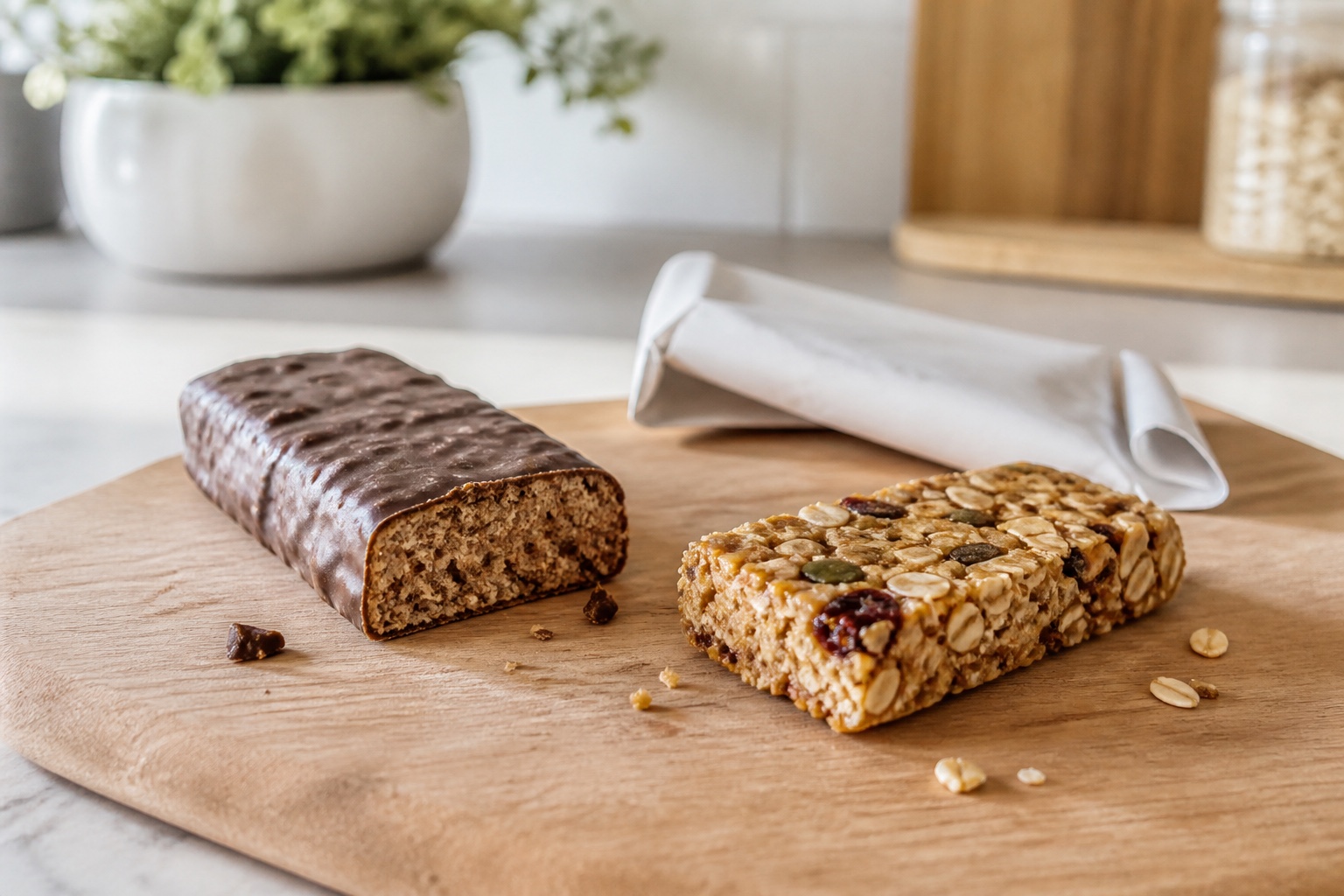
The shortest snack can have the longest ingredient list
The wrapper says dairy-free, plant-based, high protein, and low sugar. The bar is gone in six bites. Two hours later, your stomach feels fuller than it did after lunch. None of the claims were necessarily false. They were answering nutrition and sourcing questions, not predicting your digestive response.
Protein bars are engineered to fit protein, sweetness, texture, shelf life, and sometimes a large fiber number into a small package. The ingredients that make those goals possible can be the same ones worth testing when a bar repeatedly tracks with bloating or urgency.
Dairy-free answers only the dairy question
A dairy-free bar can be useful for someone avoiding milk, but it does not mean low FODMAP, low fiber, allergen-free, or easy on every stomach. Pea, soy, rice, nuts, and seeds can supply the protein. Dates or other fruit can bind and sweeten the bar. Chicory-root fiber can raise the fiber number. Polyols can lower the sugar number.
The reverse is also true: a bar containing whey is not automatically a problem for everyone with lactose intolerance. Lactose amount varies, and tolerance is dose-dependent. Milk allergy is different; whey and casein are milk proteins, and FDA allergen labeling should guide avoidance rather than a digestive trial.
Added fiber can be doing two jobs at once
Inulin, chicory-root fiber, and oligofructose can improve texture while adding fiber without much bulk. Human digestive enzymes do not fully break inulin down; microbes ferment it in the colon. That can support changes in the microbiome and can also produce gas.
The response is not automatic. In a randomized crossover trial, healthy adults eating snack bars with 3 or 7 grams of inulin-type fructans daily had no group-level increase in gastrointestinal symptoms. In a separate controlled challenge, 20 grams of inulin produced much more colonic gas in a small group with IBS. Different dose, different population, different result.
That is why the label is a starting point rather than a verdict. Someone who rarely eats added fiber may notice a bar that supplies a large amount at once. Someone else may tolerate it easily.
Low sugar can mean a different carbohydrate arrived
Sugar alcohols such as sorbitol, mannitol, xylitol, maltitol, and erythritol are used in some reduced-sugar products. They are absorbed differently, and the unabsorbed portion can draw water into the bowel or be fermented. Symptoms depend on the specific ingredient, dose, and person.
FDA does not require total sugar alcohol to appear on every Nutrition Facts panel unless particular claims or conditions apply. Read the ingredient list for the individual names. Also look for several sweetening systems in one bar: a polyol, concentrated fruit, and added fiber can stack even when each sounds modest alone.
| Label clue | What it may be doing | Cleaner comparison |
|---|---|---|
| Inulin, chicory root, oligofructose | Adds fermentable fiber and texture | Choose a bar without added isolated fiber |
| Sorbitol, mannitol, xylitol, maltitol, erythritol | Lowers sugar; tolerance varies by polyol and dose | Choose a bar sweetened without polyols |
| Dates, apple, pear, fruit concentrates | Adds sweetness and binding; amount matters | Compare with a bar using a smaller, simpler sweetener system |
| Whey or casein | Adds milk protein and may accompany product-specific lactose | Use the allergen statement; test lactose separately only when allergy is not the issue |
| A long protein blend | Changes several plant or dairy sources at once | Try a single-source protein if you are isolating the protein variable |
Test the bar, not the workout around it
Eat the bar on a day and at a time when you can separate it from a hard run, a new pre-workout, or a large coffee. Start with the labeled serving rather than two bars because the package looks small. If symptoms repeat, compare a similar-size snack with a shorter ingredient list and one familiar protein source.
Keep the rest of the meal and timing reasonably steady. A bar eaten after hours without food may land differently from one eaten after lunch. Bellyweather can store the exact product and later check-in, but it cannot prove from one episode that inulin, a polyol, or the protein caused the symptom.
- Read below the front-of-pack claims and record the complete ingredient list.
- Compare one bar at a time; do not swap the bar, coffee, and workout together.
- If added fiber is the suspect, choose a bar without inulin or chicory root for the comparison.
- If a sugar alcohol is the suspect, check other sources that day, including gum and mints.
Convenient should still be interpretable
A protein bar does not need to be pure or homemade to work for you. It needs to match your nutrition needs and be tolerable at the amount you eat. The most useful swap is often not plant versus dairy. It is crowded formula versus simple formula.
Seek medical advice for persistent or severe symptoms, repeated vomiting or diarrhea, blood or black stool, unexplained weight loss, trouble swallowing, or signs of an allergic reaction such as hives, swelling, wheezing, or throat tightness.
Frequently asked questions
Why does a dairy-free protein bar make me bloated?
Dairy-free removes milk but may leave other variables, including inulin or chicory-root fiber, sugar alcohols, concentrated fruit, nuts, and a high fiber dose. Check the full ingredient list and compare it with a simpler snack before blaming the protein category.
Does chicory-root fiber cause gas?
It can because its inulin-type fructans are fermented in the colon. Dose and individual sensitivity matter. A trial of 3 or 7 grams daily in snack bars found no symptom difference in healthy adults, while a 20-gram inulin challenge produced substantial gas in a small IBS study.
Are low-sugar protein bars easier on the stomach?
Not necessarily. Some replace sugar with polyols or add isolated fiber, both of which can cause symptoms for some people at sufficient doses. Low sugar is a nutrition claim, not a digestive-tolerance claim.
Should I avoid every ingredient ending in -itol?
No universal ban is needed. Polyols differ, serving sizes differ, and tolerance is individual. If a particular product repeatedly tracks with symptoms, compare it with a similar product without that polyol while keeping the rest of the snack consistent.
Sources
Bellyweather is a wellness and food-tracking app, not a medical device. This article is for general information only and is not medical advice. Never use an article, rating, or AI response to decide whether a food is allergy-safe. Individual tolerances vary — talk to a qualified healthcare professional before making dietary changes related to a health condition.