Learn
Salads make you bloated. Would cooked vegetables be easier?
Cooking softens plant tissue, but it does not turn every vegetable into a low-gas food. The vegetable, amount, cooking method, and rest of the salad matter.
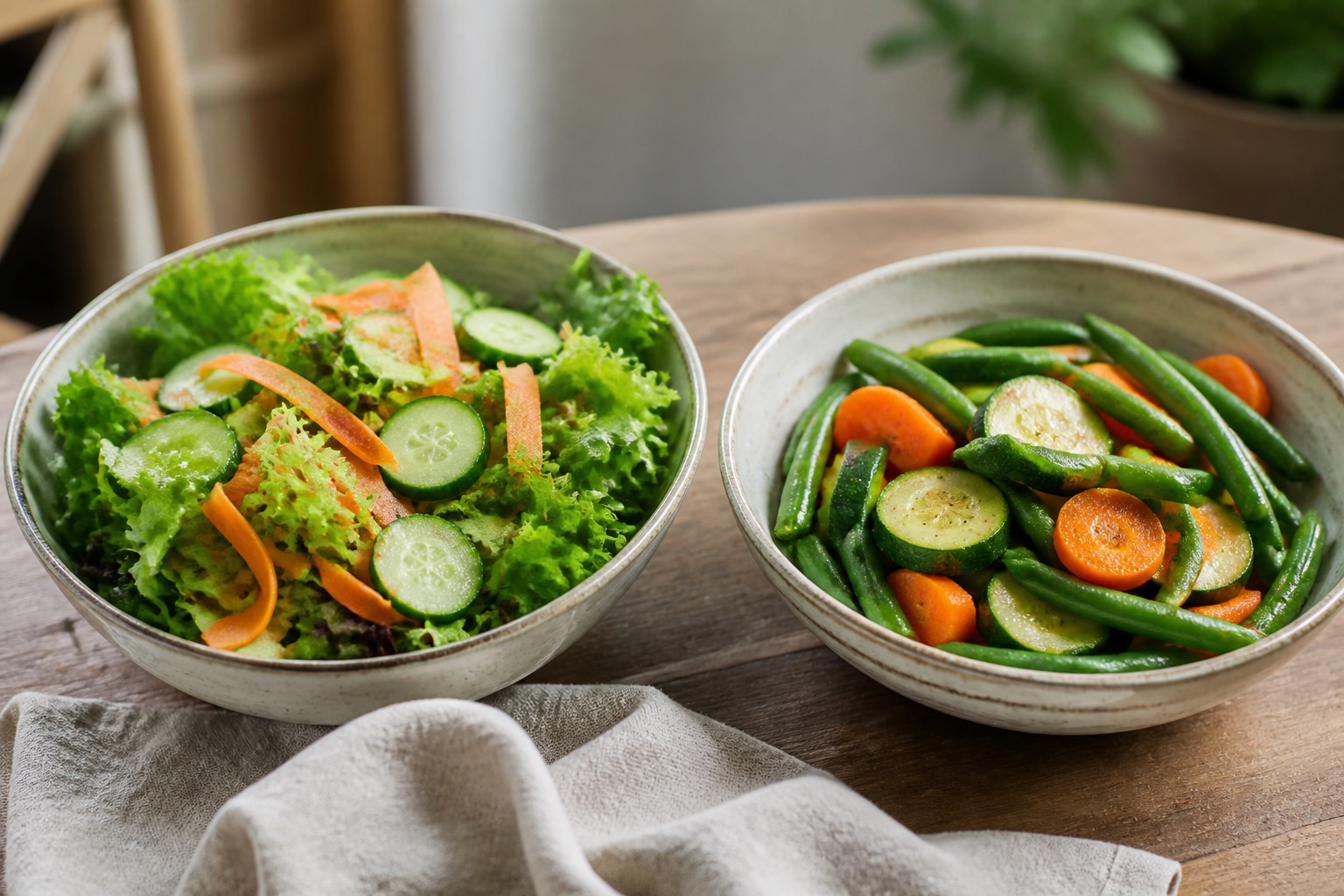
The salad may be carrying the blame for the whole bowl
A large lunch salad leaves you stretched and uncomfortable, while the roasted vegetables at dinner seem fine. The obvious story is that your stomach cannot digest raw food. But lunch also contained a mountain of leaves, raw onion, chickpeas, avocado, dried fruit, and a garlic-heavy dressing. Dinner contained one smaller portion of vegetables beside rice and chicken.
Those meals did not compare cooking. They compared different vegetables, amounts, ingredients, textures, and total volumes. A cleaner test starts with one vegetable, not the category called salad.
Heat softens the structure your teeth and gut have to handle
Plant cells are surrounded by walls made largely from fiber-related structures such as cellulose, hemicellulose, and pectin. Cooking can soften and reorganize that matrix, make the food easier to chew, and release some nutrients from inside the cells. The effect varies by plant and method; a steamed zucchini and a raw cabbage leaf do not undergo the same change.
Softer food can feel easier without having less total carbohydrate available to gut microbes. Fiber is not simply destroyed when a vegetable wilts. Some soluble compounds move into boiling water, some nutrients become more accessible, and some are lost. Steaming, roasting, microwaving, and boiling therefore create different foods even before seasoning is added.
Gas follows the carbohydrate and dose, not the word raw
NIDDK notes that gas can increase when carbohydrates that are not fully digested in the small intestine reach bacteria in the colon. Cruciferous vegetables and legumes are common examples, but response varies. A cooked mound of cauliflower can still deliver more fermentable carbohydrate than a small raw cucumber salad.
Fiber amount matters too. A sudden jump can produce more gas and bloating whether the vegetables were raw or cooked. NIDDK advises adding fiber gradually for people with IBS. Cooking may make a serving easier to chew and shrink its volume, but the smaller-looking pile can also make it easy to eat more of the original vegetable.
| Preparation | Main change | What it does not guarantee | Useful test |
|---|---|---|---|
| Raw | Keeps crisp structure and often more visible volume | That the food will cause symptoms | Use a modest portion of one familiar vegetable |
| Steamed or microwaved | Softens tissue with little cooking water | Lower fermentable-carbohydrate content | Compare texture while keeping the food and portion similar |
| Boiled and drained | Softens tissue; some water-soluble material may leave with the water | A low-FODMAP or symptom-free serving | Useful only when the cooking water is discarded |
| Roasted or sautéed | Softens and concentrates as water is lost | A lighter meal; oil and portion can rise | Measure the vegetable and added fat |
A salad has more variables than lettuce
Onion, garlic, beans, wheat croutons, avocado, certain fruits, rich dressings, and sugar alcohols in low-sugar toppings can each change the digestive load. A very large raw meal can also create fullness from volume before fermentation begins. That does not make salad unhealthy. It makes the label too broad to identify what happened.
Texture can change eating behavior as well. A crunchy meal may take longer to chew, while a giant salad can still be eaten quickly when you are hungry. Eating speed, swallowed air, and a fizzy drink beside the bowl can add upper-gut pressure and belching that feels different from later colonic gas.
Make the comparison small enough to answer
Choose one vegetable you regularly eat, such as carrots, zucchini, spinach, or green beans. Compare a modest raw serving with a similarly measured steamed or lightly cooked serving on separate days. Keep the dressing, meal size, and other likely triggers as similar as possible.
If the cooked version repeatedly feels better, you have a practical preparation preference. It does not prove that raw vegetables as a group are harmful or that cooking removed a specific FODMAP. Bellyweather can keep the preparation and later check-in together so the result does not get blurred into a memory of 'salad.'
- Compare the same vegetable, not raw salad with cooked mixed vegetables.
- Measure before cooking so water loss does not quietly double the portion.
- Keep onion, garlic, beans, dressing, and fizzy drinks out of the first comparison.
- If fiber intake recently jumped, step the amount up gradually rather than eliminating vegetables.
Do not cook around symptoms that need evaluation
New or persistent bloating with severe pain, repeated vomiting, inability to pass stool or gas, blood or black stool, fever, unexplained weight loss, or a major change in bowel habits needs medical attention. People with a known bowel narrowing, active inflammatory bowel disease, gastroparesis, or recent gastrointestinal surgery may need individualized texture and fiber guidance from their care team.
For everyone else, cooked vegetables are a reasonable comfort experiment, not a nutritional downgrade or a diagnosis. The useful result is specific: this vegetable, at this amount, prepared this way.
Frequently asked questions
Are cooked vegetables easier to digest than raw vegetables?
They can feel easier because cooking softens plant tissue and can reduce bulk, but the effect depends on the vegetable, preparation, and person. Cooking does not automatically remove fiber or fermentable carbohydrates, so portion and the rest of the meal still matter.
Does cooking vegetables reduce FODMAPs?
There is no universal rule. Some water-soluble compounds can move into boiling water, particularly when food is boiled and drained, but changes vary by vegetable and method. Steaming or roasting does not make a food automatically low FODMAP. Treat preparation as a product-specific test, not a guarantee.
Why does salad bloat me more than cooked vegetables?
Possible differences include portion volume, raw texture, a sudden fiber load, the specific vegetables, and toppings such as onion, garlic, beans, avocado, fruit, croutons, or rich dressing. Compare one vegetable in similar amounts before concluding that every raw vegetable is the problem.
Should I stop eating vegetables if they cause gas?
Not as a first step. Gas can increase when fiber or fermentable carbohydrate rises quickly. Try a smaller amount, a gradual increase, and a simpler cooked preparation. Persistent or severe symptoms, weight loss, bleeding, vomiting, or major bowel changes should be discussed with a clinician.
Sources
Bellyweather is a wellness and food-tracking app, not a medical device. This article is for general information only and is not medical advice. Never use an article, rating, or AI response to decide whether a food is allergy-safe. Individual tolerances vary — talk to a qualified healthcare professional before making dietary changes related to a health condition.