Learn
Why does coffee upset my stomach?
Decaf does it too, which clears the obvious suspect. Coffee runs three separate jobs on your gut at once, and the one that sends you to the bathroom isn't the caffeine.
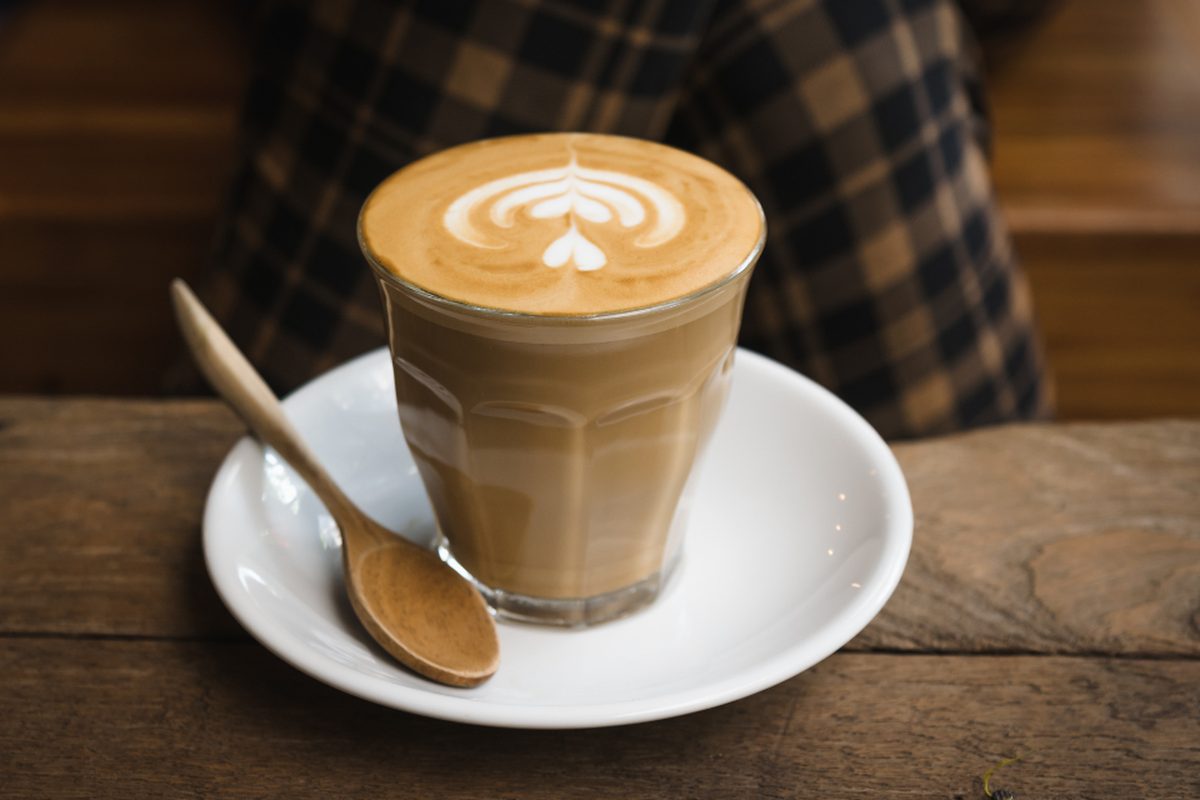
You switched to decaf. Your gut didn't get the memo.
You drink your coffee and within ten minutes you're looking for a bathroom. So you do the sensible thing and blame the caffeine, switch to decaf, and wait for the reprieve. It doesn't come. Same urgency, same churn, same ten-minute clock. The obvious suspect has an alibi, and you're left with a stranger question: if it isn't the caffeine, what in the cup is doing this?
Most coffee advice stops at "it's the caffeine, cut back." That's the part that's easy to test, and for a lot of people it's the part that turns out to be wrong. Your gut isn't reacting to one thing in your mug. It's reacting to three, and they run on different timers.
Why your morning cup is really three drinks at once
Here's the part that changes how you read your own reaction. Coffee isn't one input your gut accepts or rejects. It's a few hundred compounds that hit different parts of your digestive tract, and at least three of them do a separate, documented job. One speeds up the colon. One can loosen the valve at the top of the stomach. One, the caffeine, winds up the whole system. They overlap, they stack, and they don't all live in the same cup, which is why decaf can quiet one and leave another untouched.
Your gut is wired to your brain and runs partly on autopilot, and coffee pushes several of those automatic buttons at once. The slump after a meal, the urgency before you've had breakfast, the heartburn behind your breastbone are all the same organ answering different signals. Figure out which of the three is yours and the fix stops being "give up coffee" and starts being something far smaller. By the end you'll know which button your cup is pressing.
The reflex that sends you to the bathroom (and it isn't the caffeine)
Start with the famous one: the run to the toilet. The trigger is a built-in circuit called the gastrocolic reflex. When something arrives up top, your gut gives the far end a nudge to make room, like a conveyor belt that lurches forward when a new box lands at the start. It's why a big meal can send you looking for a bathroom. Coffee fires that same circuit, faster and harder than its small volume should warrant.
Watch the clock on it. When researchers threaded pressure sensors through the colons of healthy volunteers, coffee set off contractions in the lower colon within four minutes of the first sip. Four minutes is far too quick for the coffee itself to have traveled the length of you. Nothing physically arrived down there that fast. Your gut got a signal, not a delivery, and answered it. That's the lurch you feel.
Now the twist that breaks the caffeine theory. In that same study, decaffeinated coffee set off the motility jump too, within the same four minutes, while plain hot water did nothing. The defecation urge it produces, which about a third of people report, shows up after coffee "caffeinated or not," but not after warm water. So the urge isn't the caffeine acting alone. Something else in the brew is talking to your colon, and it's still there after the caffeine is stripped out. The likely messengers are gut hormones: coffee stimulates gastrin release, and both regular and decaf coffee trigger cholecystokinin, signals that tell the gut to move. The decaf in your hand is still pulling a lever you thought you'd let go of.
colonic motor activity (water = 100)
The valve at the top of your stomach, and why it slips
The second job is the burn, and it happens at the other end of the meal's path. At the top of your stomach sits a ring of muscle, the lower esophageal sphincter, that's supposed to stay shut so acid stays down where it belongs. Think of it as a drawstring on a bag. Coffee can loosen the knot. When that ring relaxes, stomach contents slip up into the esophagus, and that's the heartburn, the sour taste, the pressure behind your breastbone.
The measurements are old and specific. In a 1980 study, a cup of coffee dropped resting sphincter pressure in healthy volunteers from about 19 down to roughly 14 mmHg, with a bigger dip when the coffee was more acidic. A looser valve plus your stomach's own acid is a recipe for reflux. Honesty check: across studies the sphincter result is genuinely mixed, and decaf muddies it further. One trial that decaffeinated the coffee actually cut measured reflux time sharply, from about 18% to 3%. So caffeine isn't the whole story, but for the burn, unlike the urgency, switching to decaf is more likely to help than to leave you exactly where you were. If your trouble is burning rather than urgency, this valve, not your colon, is the one to watch.
Drinking it on an empty stomach sharpens the edge. With no food to buffer it, the acid coffee provokes has nothing to work against, and the cup hits a gut that's been quiet all night. If your only reaction is a first-thing-in-the-morning, nothing-in-me-yet reaction, the timing is doing some of the work, not the coffee alone.
What's actually in your cup, hitting which part of you
Three jobs, three different parts of the gut, three different fixes. The reason "just cut caffeine" disappoints so many people is that it cleanly removes only one row of this table, and often not the row that's bothering them. Read down it, find your symptom first, and the lever comes after.
| What it does | Where it acts | Symptom | Still happens with decaf? |
|---|---|---|---|
| Fires the gastrocolic reflex | Colon (large intestine) | Urgency, the morning run | Yes — decaf triggers it within the same 4 minutes |
| Can relax the LES valve | Top of the stomach | Heartburn, reflux, sour taste | Mixed — decaffeinating coffee cut reflux in one trial |
| Caffeine as a stimulant | Whole system + gut motility | Jitter, cramping, looser stool, scales with dose | No — this is the caffeine part |
| Milk / lactose (if you add it) | Small intestine | Gas, bloating 1–3 hrs later | Depends on the milk, not the coffee |
How to find your one lever this week
Because the three jobs are separable, you can test them one at a time instead of giving up coffee on a hunch. The goal isn't a perfect protocol. It's one change that maps to your actual symptom, run for a few days, watched honestly.
Match the move to the mechanism. If switching to decaf already failed you, that's a clue, not a dead end: it tells you the caffeine row isn't your row, so spend your effort on the other two.
- If it's urgency: the gastrocolic reflex hits hardest on an empty stomach, so try coffee with or just after food and see if the lurch softens. Decaf alone probably won't help here, since it fires the same reflex on the same four-minute clock.
- If it's heartburn: protect the valve. Eat something first, sip rather than gulp, stay upright for a bit, and try a lower-acid or cold-brew coffee. Decaf is worth a real trial for the burn, where it's more likely to help than it is for urgency.
- If it's jitter, cramping, or loose stool that scales with how much you drink: this is the caffeine row. Cutting back or going part-decaf is the move that actually fits the cause.
- If you take it with milk and the trouble is gas or bloating an hour or two later: drink it black for a few days. The lactose, not the coffee, may be the real culprit.
The cup didn't change. What you can read off it did.
Tolerance to all of this is individual, and the honest caveat is that the studies measure averages while you live in your own gut. The numbers tell you the mechanisms are real; they can't tell you which one is yours or how loudly it speaks. You find that by watching, and the pattern is hard to hold in your head when the same cup does three different things on three different timers. A simple log that lines up what you drank, when, on how empty a stomach, against what you felt afterward turns a vague "coffee hates me" into a specific lead, the kind of cross-timer pattern Bellyweather is built to surface. It's a lead to test, not a verdict, and not medical advice.
So you don't have to break up with coffee. You have to find which of its three jobs is the one that turns on you, and that's a smaller, fixable question. Decaf didn't help because you were aiming at the wrong button. Now you know there are three.
Frequently asked questions
Why does decaf coffee still upset my stomach?
Because the effect that creates urgency doesn't depend on caffeine. Decaf still fires the colonic reflex that gets you moving; in the manometry study it kicked in within the same four minutes as regular coffee, while hot water did nothing. The caffeine-specific jitter and stimulant push do go away with decaf. The reflux side is more mixed: decaffeinating coffee actually reduced measured reflux in one trial, so for heartburn decaf is worth a real try.
Why does coffee make me poop within minutes?
Coffee fires the gastrocolic reflex, a built-in circuit that nudges your colon to move when something hits your stomach. In manometry studies it set off colonic contractions within four minutes of the first sip, too fast for the coffee to have physically arrived there, so it's a nerve-and-hormone signal, not a delivery. About one in three people report this, more often women.
Is coffee bad for acid reflux?
For some people it makes reflux more likely. Coffee can lower the pressure of the lower esophageal sphincter that normally keeps acid down; in one study a cup dropped that pressure from roughly 19 to 14 mmHg, more so with more acidic coffee. The evidence across studies is mixed, and it's a common trigger rather than a guaranteed one. Eating first, sipping slowly, and trying low-acid, cold-brew, or decaf can help.
Does drinking coffee on an empty stomach make it worse?
It can, for two reasons. With no food to buffer it, the acid coffee provokes has nothing to work against, and the colonic reflex tends to hit harder on an empty gut. If your only symptoms come first thing before you've eaten, try having coffee with or after food and see whether it settles.
Could it be the milk, not the coffee?
Possibly, if your symptom is gas or bloating that shows up an hour or two later rather than immediate urgency or burning. Lactose in milk is a separate trigger from anything in the coffee itself. Drinking it black for a few days is a clean way to tell the two apart.
Sources
- Rao et al., Is coffee a colonic stimulant? Eur J Gastroenterol Hepatol (1998)
- Brown, Cann & Read, Effect of coffee on distal colon function, Gut (1990)
- Iriondo-DeHond et al., Effects of Coffee and Its Components on the Gastrointestinal Tract and the Brain–Gut Axis, Nutrients (2021)
- Thomas et al., Inhibitory effect of coffee on lower esophageal sphincter pressure, Gastroenterology (1980)
- Boekema et al., Coffee and gastrointestinal function: facts and fiction, Scand J Gastroenterol Suppl (1999)
Bellyweather is a wellness and food-tracking app, not a medical device. This article is for general information only and is not medical advice. Never use an article, rating, or AI response to decide whether a food is allergy-safe. Individual tolerances vary — talk to a qualified healthcare professional before making dietary changes related to a health condition.