Learn
Fiber is supposed to help. So why does it bloat you?
The food every doctor tells you to eat more of is also a top bloat driver. The gas usually isn't your gut rejecting fiber — it's fermentation, and a sign the bacteria are still catching up.
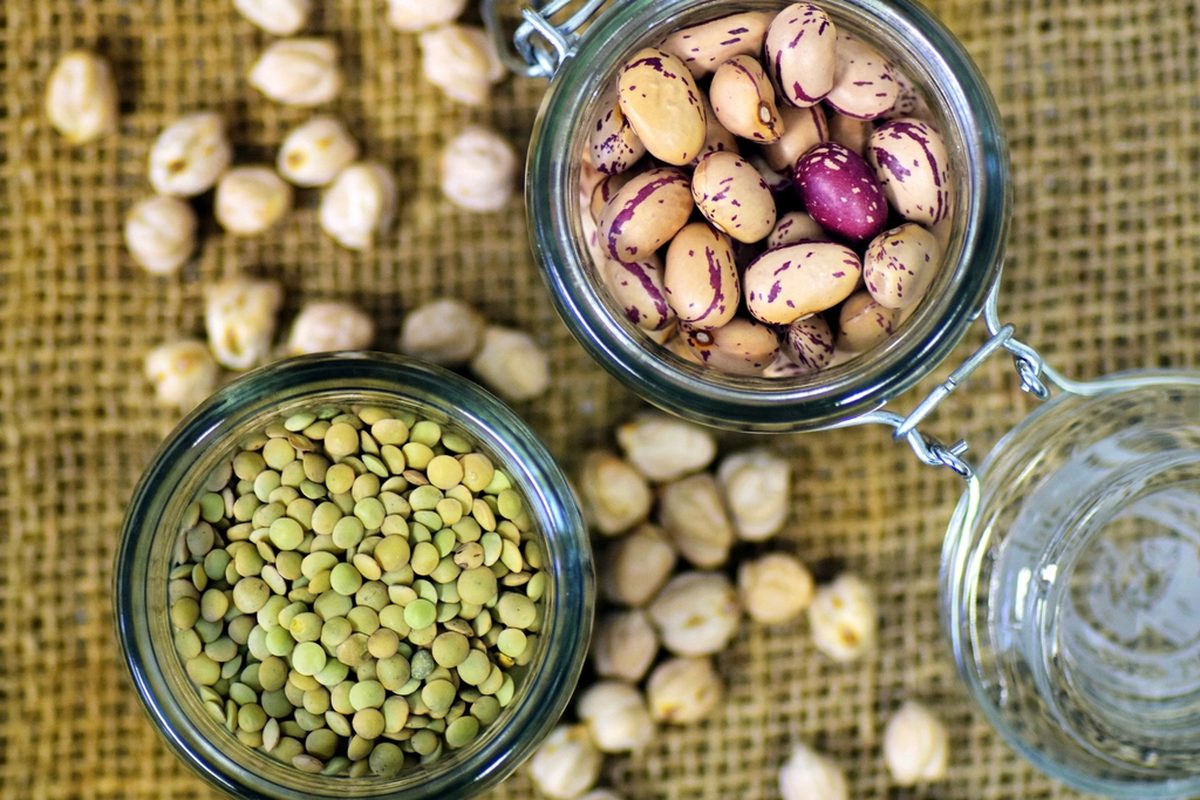
You did the healthy thing. Your gut filed a complaint.
You finally took the advice. More beans, more oats, a scoop of something fibrous in the morning, an extra cup of lentils at dinner. Every doctor, every label, every headline has been telling you to do exactly this for years. By the afternoon you're distended, gassy, and quietly furious, because the one change everyone swore would make you feel better has made you feel worse.
So you do the reasonable thing and conclude fiber isn't for you. The problem with that conclusion: the gas you're feeling usually isn't your gut rejecting the fiber. It's your gut eating it. The discomfort is a process starting up before it's had time to run smoothly, and the fix is closer to the opposite of quitting.
Why the right move feels like the wrong one
This matters because fiber is one of the few food rules with deep evidence behind it, and bailing on it over a bad first week is a common, costly mistake. Your colon is lined with cells that run partly on a fuel your own body can't make. They get it from bacteria fermenting fiber. Starve that system and the lining gets hungrier, leakier, and more prone to inflammation over time (Koh et al., Cell, 2016).
Here's the idea worth carrying out the door: the gas and the benefit come from the same event. You can't ferment fiber into fuel for your gut without also making gas as a byproduct. The bloat isn't proof the food is wrong for you. It's usually a sign your gut bacteria haven't scaled up to handle the new volume yet. By the end you'll know how to give them the few weeks they need instead of quitting on day three.
Your colon is a brewery, and you just doubled the order
Picture a sourdough starter. Flour and water sit in a jar, invisible yeast and bacteria wake up, and within hours the whole thing is bubbling and pushing against the lid. Nobody added gas. The bubbles are the microbes eating, and the gas is what eating produces. Your colon runs the same way, on a much larger scale, every day of your life.
Now the literal version. Soluble, fermentable fibers — the fructans in wheat and onion, the GOS in beans and lentils, the inulin in chicory root, the beta-glucan in oats — are built so your own digestive enzymes can't break them down. They pass through your stomach and small intestine untouched and arrive intact at your large intestine. That's by design. Those fibers are food for you only because they're food for the trillions of bacteria waiting downstream.
When those bacteria ferment fiber, they make two things at once. The first is short-chain fatty acids, including butyrate, the main energy source for the cells lining your colon (Koh et al., Cell, 2016). That's the prize. The second is gas: hydrogen, methane, carbon dioxide. Real volume, made inside you, that stretches the bowel wall and registers as bloating and pressure. Same reaction, two products. You felt the gas. You didn't feel the butyrate quietly feeding your gut lining, but it came from the same bubbling jar.
The part that explains the misery is the crew size. How many fermenters you keep on staff is set by what you usually eat. Eat little fiber for years and you keep a small crew. Flood them with beans on Monday and you've handed a skeleton staff a tripled order. They ferment it clumsily, fast and gassy, until the right species multiply and the work spreads out. That ramp-up takes weeks, not days. It's the single fact that turns "fiber hates me" into "I went too fast."
What the bean studies actually show about week one
The clearest evidence comes from beans, because researchers have watched the gas curve over time. In a set of feeding studies, healthy adults ate half a cup of beans every day for eight weeks, and the team tracked how many reported increased flatulence each week (Winham & Hutchins, Nutrition Journal, 2011). The first week was rough. For most people, it didn't stay that way.
Across the studies, 70% or more of the people who got gassy said it had faded by the second or third week. In the pinto-bean arm, the share reporting increased flatulence fell from 50% of the group in week one to 6% in week two, and stayed near there for the rest of the eight weeks. The researchers' blunt conclusion: worries about bean-driven gas are likely exaggerated, because most guts adapt. That's the adaptation you're trying to reach, and you only reach it by staying in past the bad week.
One honest caveat. These are self-reported perceptions of gas, not volume measured in a lab, and the study notes that individual variation is real. Your curve is yours. But the shape held across all three bean types: high at first, then down.
% reporting increased gas
Not all fiber bubbles the same
If the gas comes from fermentation, then the gassiest fibers are simply the most fermentable ones, and you can steer by that. Inulin from chicory root and the fructans and GOS in beans and wheat ferment fast and hard, which is why they're the classic culprits. Oat beta-glucan ferments too, but it forms a gel that slows the process down, so it tends to feel gentler. At the other end sit the fibers your bacteria barely touch.
Psyllium is the standout there. It's a soluble, gel-forming fiber that passes through largely unfermented, so it adds bulk and holds water without feeding a gas bloom (McRorie & McKeown, J Acad Nutr Diet, 2017). Wheat bran is poorly fermented in a different way, working mostly as coarse insoluble bulk. None of this makes the fermentable fibers bad. Inulin and GOS feed your bacteria precisely because they get fermented. It means that when your gut is already irritated, leaning on the low-gas end buys you fiber's bulk without the worst of the bubbling.
| Fiber | Found in | Fermentability | Gut feel |
|---|---|---|---|
| Inulin / fructans | Chicory root, wheat, onion, garlic | High — fast and gassy | Roughest |
| GOS | Beans, lentils, chickpeas | High | Rough |
| Oat beta-glucan | Oats, oat bran, barley | Moderate, gel-slowed | Gentler |
| Wheat bran | Whole wheat, bran cereal | Low (insoluble bulk) | Gentle, can scratch a sensitive gut |
| Psyllium | Psyllium husk supplements | Very low — mostly unfermented | Gentlest |
How to add fiber without paying for it
The whole plan falls out of the mechanism. Your bacteria adapt, but only if you give them a target they can grow into instead of an avalanche they choke on. Go slow, drink water, and lean gentle while your gut is learning. The single most important move is the pace.
One real exception. If you're in an active flare — a Crohn's or colitis attack, diverticulitis, a bowel narrowing, or fresh post-surgery healing — the usual advice flips, and a short low-fiber stretch is sometimes the right call to rest an inflamed gut. That's a temporary, clinician-guided move for a specific situation, not a way of life. More fiber is the long game for most people. Less fiber is an acute tool for a few. This is general information, not medical advice, and a flare is exactly when to ask your own clinician which side of that line you're on.
- Ramp slowly. Add roughly one serving (about 5 grams) every week or so, not all at once. The gut you have today can't ferment the diet you want by Friday.
- Drink water alongside it, especially with gel-forming fibers like psyllium and oats. They pull water in to do their job, so give them yours instead of your colon's.
- When your gut is touchy, lean on the low-gas end — psyllium, oats, peeled and cooked vegetables — and ease the high-fermentation stars like beans and chicory-root inulin back in later.
- Give any new level two to four weeks before you judge it. Week one is the spike, not the verdict. Because adaptation is individual, it helps to log what you added and how you felt: Bellyweather tallies that week-by-week so you can see your own curve bending instead of trusting a foggy memory — a lead to test, not a verdict.
The gas was the gut working, not breaking
Go back to that miserable afternoon. Nothing about the advice was wrong. You handed a small fermentation crew a tripled order, and the bloating was them working flat-out to keep up. That's the same reaction that, once it settles, feeds the cells lining your gut every day. Fiber wasn't the thing that hates you. The speed was. Slow the ramp, keep the water close, and give the brewery a few weeks to hire. The bubbles fade. The fuel stays.
Frequently asked questions
Does fiber bloating go away, or do some people just never tolerate it?
For most people it eases. In bean feeding studies, 70% or more of those who got gassy said it had faded by the second or third week as their gut bacteria adapted (Winham & Hutchins, 2011). A slow ramp speeds that along. If severe symptoms persist for weeks despite going slowly, that's worth raising with a clinician rather than pushing through.
How fast should I increase my fiber?
Slowly. A common rule of thumb is adding about one serving — roughly 5 grams — every week or so, with water, rather than overhauling your diet overnight. The exact pace is individual, but the principle is fixed: your fermentation bacteria need weeks to scale up, so the gas is usually a sign you moved faster than they could grow.
Which fiber is least likely to cause gas?
Psyllium. It's a gel-forming soluble fiber that passes through mostly unfermented, so it adds bulk and holds water without feeding a gas bloom (McRorie & McKeown, 2017). Oat beta-glucan is also gentler than inulin or the GOS in beans. The trade-off is that the gassiest fibers are gassy precisely because they feed your bacteria the most.
Should anyone eat less fiber, not more?
Temporarily, in specific situations. During an active flare of Crohn's, ulcerative colitis, or diverticulitis, with a bowel narrowing, or right after certain surgery, a short low-fiber period can rest an inflamed gut. That's a clinician-guided, temporary move, not a long-term plan. For most people without those conditions, more fiber over time is the goal.
Is the gas a sign the fiber is working?
Often, yes. Fermentation produces short-chain fatty acids that feed your colon lining and gas as a byproduct of the same reaction, so some gas comes with the benefit. That said, a lot of gas mainly signals you ramped up faster than your bacteria adapted. The goal isn't zero gas — it's the comfortable amount you reach after a few weeks at a steady level.
Sources
- Koh et al., From Dietary Fiber to Host Physiology: Short-Chain Fatty Acids as Key Bacterial Metabolites, Cell (2016)
- Winham & Hutchins, Perceptions of flatulence from bean consumption among adults in 3 feeding studies, Nutrition Journal (2011)
- McRorie & McKeown, Understanding the Physics of Functional Fibers in the Gastrointestinal Tract, J Acad Nutr Diet (2017)
- Monash University — How and Why FODMAPs Trigger IBS Symptoms
- Cleveland Clinic — Fiber: How to Increase the Amount in Your Diet
Bellyweather is a wellness and food-tracking app, not a medical device. This article is for general information only and is not medical advice. Never use an article, rating, or AI response to decide whether a food is allergy-safe. Individual tolerances vary — talk to a qualified healthcare professional before making dietary changes related to a health condition.